
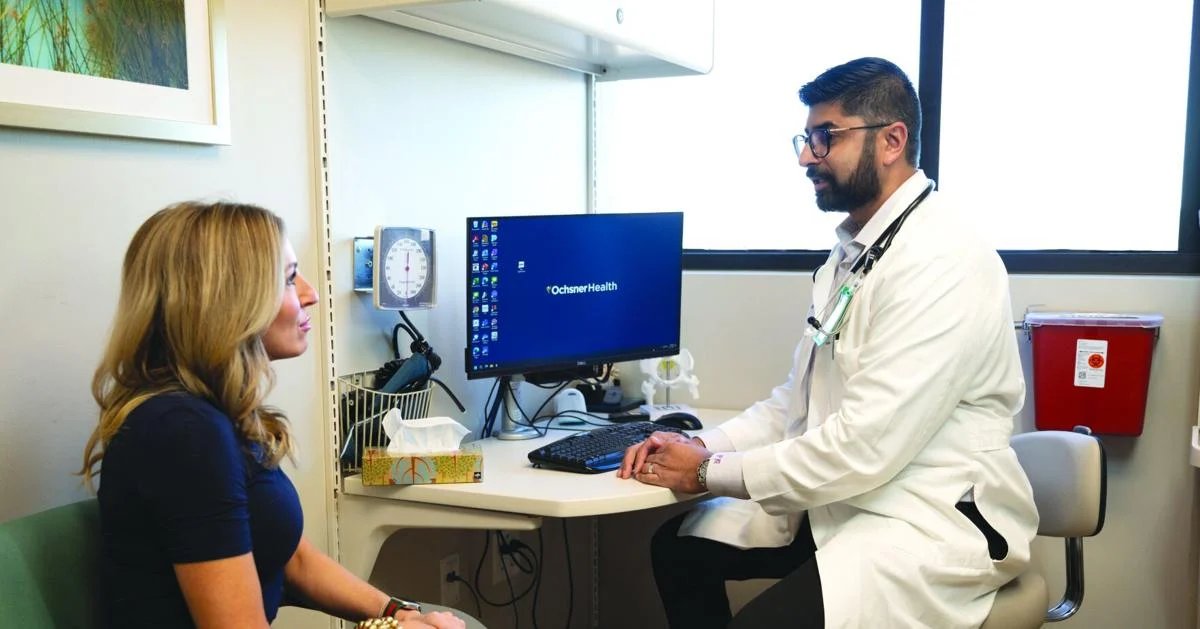
80% of cardiovascular diseases, including heart attacks and strokes, can be prevented with regular checkups, control of chronic diseases and a healthy lifestyle. Adopting heart-healthy habits earlier in life is now more important than ever, as an increasing number of adults are being diagnosed with heart disease before the age of 40.
Heart disease has long been thought of as a condition that primarily affects older adults, but Ochsner Health physicians say that perception no longer matches reality. Increasingly, they are diagnosing serious heart conditions in people in their 20s, 30s and 40s, some of whom initially appear healthy and active. Experts attribute this to a combination of genetics and lifestyle factors, underscoring the importance of early screening and empowering individuals to take an active role in their health.
That was the case for Baton Rouge business owner, mother of three and competitive tennis player Ellen Pino. During a routine tennis practice in October 2022, Pino felt her heart stop briefly, then start beating faster. Her Apple Watch indicated that her heart rate was over 200 beats per minute. Similar incidents started happening almost every day. Pino, who was in her mid-30s at the time, also noticed that her resting heart rate was often over 100 beats per minute, even when she was relaxing at home.
“It didn’t make any sense. I’m active and healthy. I play tennis several times a week. I eat healthy. I don’t smoke. I rarely drink alcohol,” Pino said. “It was scary, and when it first happened I knew something was wrong. My chest tightened and I literally lost my breath; then my heart suddenly started beating very hard. It was a very different feeling.”
After several months of episodes, Pino connected with cardiologist Pavan Malur, MD, of Ochsner Medical Complex – The Grove. Dr. Malur immediately placed Pino on a 24/7 heart monitor, confirming his suspicions the same day. Pino was diagnosed with supraventricular tachycardia (SVT), a rhythm disorder. If not treated, SVT weakens the heart over time, especially with frequent or prolonged episodes, potentially leading to heart failure, stroke, or, in rare cases, sudden cardiac arrest.
“Irregular heart rhythms can cause weakening of the heart muscle or a blood clot that can cause a stroke,” said Dr. Malur. “In some people, their blood pressure drops to very low levels, causing them to faint. This can be dangerous if someone is driving or in any other environment where they could be harmed if they pass out.”
Dr. Malur said that when cardiac conditions are diagnosed, modern medications and operations can often resolve the problem. Pino was referred to Michael Bernard, MD, section chief of electrophysiology at Ochsner Medical Center – New Orleans, and underwent a catheter ablation procedure to repair damaged areas of his heart.
“I started having symptoms every single day to maybe every two weeks,” Pino said. “I’m still shocked that all of this happened. I feel like the people at Ochsner literally saved my life. I don’t know what the outcome would have been if I hadn’t advocated for myself and my health.”

Since sharing her story with more people, Pino has referred many friends and acquaintances to Dr. Malur. Like them, they are often active adults in their 30s and 40s. Some have similar symptoms, while others are known to have a family history of heart disease or other risk factors.
“I think the use of smart devices also plays a role in young people coming to us more. Many people wear them to monitor their heart rate and other health metrics,” Dr. Malur said. “Recently, many patients who have been diagnosed with type AF have noticed irregularities in their clocks even before I noticed them. The devices are more accurate and reliable than they were a few years ago.”
While wearable technology can help people better keep track of their health on a day-to-day basis, it can’t replace wellness visits with trained practitioners.
“The demographic shift is widespread, but the increase in obesity, sedentary routines and people with a strong family history of early heart disease is particularly noticeable,” said Sammy A. Abdelghani, MD, a cardiologist at the John Ochsner Heart & Vascular Institute – Slidell. “The most common pattern is high blood pressure, abnormal cholesterol and insulin resistance or the onset of type 2 diabetes, which is often accompanied by weight gain, low activity levels, poor sleep and high stress.”

Sammy A. Abdelghani, MD, cardiologist, John Ochsner Heart & Vascular Institute – Slidell
Dr. Abdelghani said common symptoms of heart problems can include chest pain or tightness, shortness of breath, a feeling of restlessness or heaviness, dizziness or fainting. Symptoms may be subtle in some individuals, which makes regular primary care visits so important.
Reshma A., MD, primary care specialist at Ochsner Lafayette General Internal Medicine. Bhanushali said a typical appointment should include blood pressure and blood sugar measurements as well as an accurate check of a person’s weight and body mass index (BMI). People who have experienced heart-related symptoms may be referred to a cardiologist for heart monitoring, an echocardiogram or testing to determine their coronary calcium score, which is a measurement of plaque in the arteries leading to the heart, which can be an early indicator of coronary artery disease.
Increasingly, those tests reveal high blood pressure, cholesterol and blood sugar — conditions that may not cause immediate symptoms but can put the person at risk for serious complications in the future if left untreated.
“In practice, it’s usually a combination: genetics go hand in hand and lifestyle influences how it works. The good news is that smart lifestyle choices can meaningfully reduce a person’s risk of heart disease, even if genetics are not ideal,” Dr. Abdelghani said.
Specifically, Dr. Abdelghani said he has seen improvements in adults who adopt an exercise routine that combines aerobic activity and strength training, eat a Mediterranean-style diet rich in vegetables, fruits, beans, nuts, seeds and fish, maintain a healthy sleep schedule, and avoid all forms of tobacco and vaping.
“Start regular primary care early and treat your health like a long-term investment. Know your numbers, move consistently and eat in a way that will last you for years,” she said. “If you do some basic things well, most people can dramatically reduce their lifetime risk.”

Reshma A. Bhanushali, MD, primary care physician, Ochsner Lafayette General
Dr. Bhanushali said patients should seek out physicians like Ochsner, who will listen to their concerns and discuss their lifestyle to uncover any risk factors.
“A lot has changed because of this trend of heart disease occurring at younger and younger ages,” Dr. Bhanushali said. “Our grandparents didn’t have the stress of social media. They probably walked to work, and there was a lot of physical activity in that generation, it wasn’t really called exercise. So, our genetics can’t be changed, but our lifestyle can be changed.”
He emphasized that a heart-healthy lifestyle has long-term benefits for every organ, including important protection for brain health as we age.
“Sometimes, people don’t realize how damaging bad habits can be to their health. Those conversations are often eye-opening,” she said. “These are young adults who have a lot of life ahead of them. The sooner we can address any problems they have, the sooner they can get back to the things they enjoy.”
Find out your cardiovascular risk and take the first step toward a healthy heart. visit ochsner.org/heartmonth.
Ochsner Health is the leading not-for-profit health care provider in Louisiana, Mississippi and throughout the Gulf South, providing expert care at its 47 hospitals and more than 370 health and urgent care centers. To learn more about how Ochsner empowers people to get and stay healthy, visit ochsner.org.
