


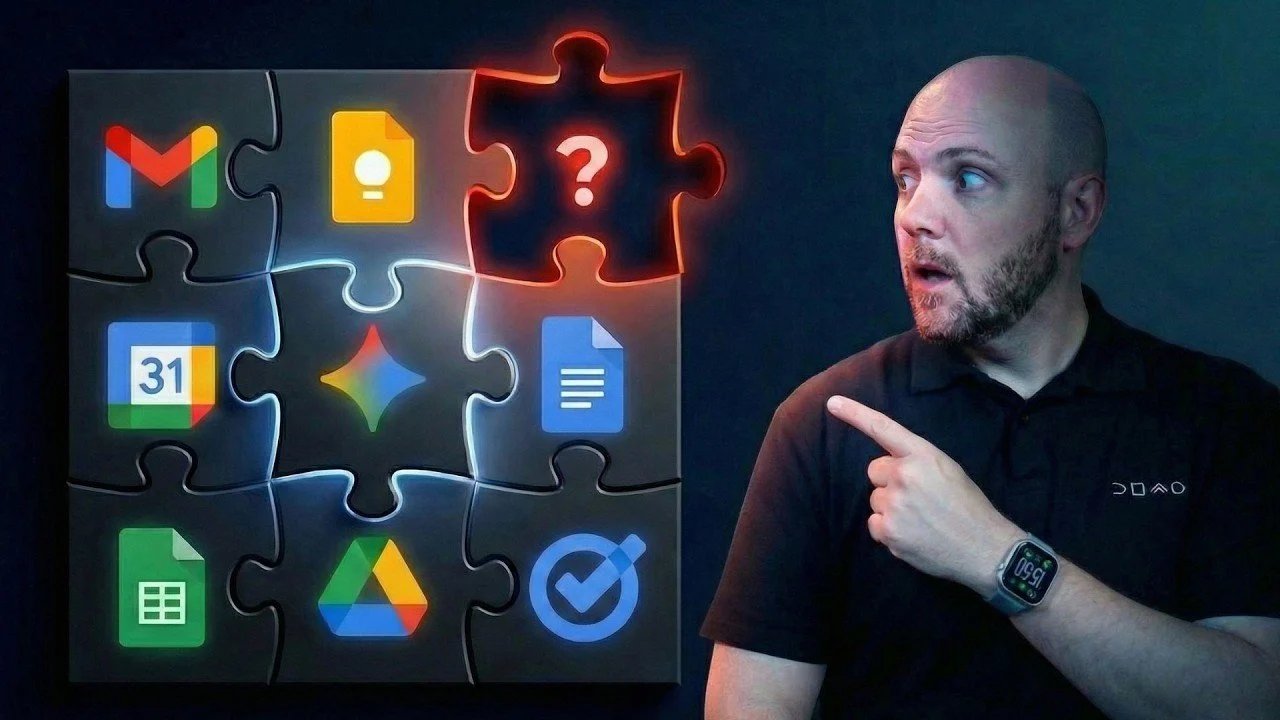
Have you ever felt like your productivity has declined despite all the features Google Workspace offers? You are not alone. Below ICOR’s Tom explains how the platform, while powerful, still struggles to help users effectively manage complex workflows. Despite the seamless integration of apps like Gmail, Google Docs, and Calendar, there is one glaring gap: the absence of a true project management solution. This forces users to tie together external platforms, creating inefficiencies and fragmented workflows. If you’ve ever juggled spreadsheets, email threads, and to-do lists, only to feel like you were spinning your wheels, this analysis will resonate with you.
In this analysis, we’ll explore why Google Workspace’s strengths in communication and collaboration aren’t enough to deal with the demands of modern productivity. You’ll uncover the hidden costs of relying on dispersed systems and learn how AI innovations like Google Gemini and NotebookLM are beginning to reshape the landscape. But is this enough to fill the void? By the end, you’ll have a clear understanding of where Google Workspace excels, where it falters, and how to bridge the gap. Sometimes, solving productivity challenges means rethinking how we put the pieces together.
Google Workspace Productivity Gap
TL;DR Key Facts:
- Google Workspace excels at communication, document collaboration, and scheduling, but lacks a dedicated project management tool, leading to inefficiencies and dependency on external platforms.
- Personal tools like Google Calendar, Google Tasks, and Google Docs are effective for specific tasks, but fall short when managing complex workflows or team-based projects.
- The closure of Google Tables has led to a decline in project management, forcing users to turn to third-party tools like ClickUp, Asana or Monday.com, which can result in fragmented workflows and miscommunication.
- AI integration, including tools like Google Gemini and NotebookLM, is transforming Google Workspace by automating tasks, providing predictive insights, and enhancing collaboration across applications.
- To maximize productivity, users should adopt strategies like integrating external project management tools, automating repetitive tasks, and using AI capabilities to address the limitations of Google Workspace.
Strengths of Google Workspace Tools
Google Workspace offers a variety of tools, each tailored to specific productivity needs. These tools are interconnected and versatile, providing significant value to individual and team workflows. However, their collective efficiency often falls short when addressing the complexities of project management.
- Google Calendar: A robust scheduling tool that integrates with Google Tasks for basic task tracking. While effective for managing personal and team calendars, it lacks advanced features like project timelines or resource allocation.
- Google Tasks: Ideal for personal task management, this tool integrates seamlessly with Gmail and Calendar. However, it is inadequate to handle team-based or complex projects that require detailed tracking and collaboration.
- Google Docs and Google Keep: Google Docs excels at real-time document collaboration, while Google Keep serves as a lightweight note-taking app. Both are effective for knowledge management but lack the structure needed for project management.
- Gmail: A powerful communication hub that can double as a task triage system when paired with Google Tasks. However, using Gmail for project management often leads to scattered workflows and missed updates.
- Google Meet: A reliable platform for remote collaboration, which offers features like meeting recordings and transcripts stored in Google Drive. While useful for communication, this function does not address dependencies or project tracking.
- Google Drive: A centralized file storage system that supports document sharing and collaborative work. However, it lacks features like task prioritization, dependencies, or progress tracking.
- Google Sheets and Google Forms: Google Sheets is often repurposed for project tracking, but it requires manual setup and lacks intuitive features like Gantt charts. Google Forms is excellent for structured data collection but is not designed to manage workflows.
- Google Chat: Effective for quick team communication, but when used excessively for project management discussions, it can lead to inefficiencies and fragmented conversations.
Although these tools are powerful individually, their combined use often reveals gaps in managing complex workflows, especially for businesses or large teams.
Where Google Workspace falls short
The most significant limitation of Google Workspace is its lack of Dedicated Project Management Tools. A promising solution for task and project tracking, the closure of Google Tables has left users without an in-house alternative. This gap forces many users to turn to external platforms like ClickUp, Asana, or Monday.com to manage their projects effectively.
Dependence on third-party tools presents several challenges:
- Fragmentation: Project management tasks are often scattered across multiple platforms, like Gmail for communication, Google Sheets for tracking, and Google Chat for updates. This fragmentation can lead to inefficiencies and missed deadlines.
- Disabilities: Tools like Google Sheets require significant manual effort to customize for project tracking and lack advanced features like task dependencies, resource allocation, or automatic updates.
- miss comunication: Using multiple tools can lead to a lack of transparency and missed updates, especially in a team environment where seamless communication is important.
These limitations underscore the need for a more cohesive approach to project management within the Google Workspace ecosystem.
Why is your productivity still a struggle in Google Workspace?

Learn more about using Google Workspace with our in-depth articles and helpful guides.
How is AI changing Google Workspace?
integration of Artificial Intelligence (AI) Google is transforming Workspaces, introducing new ways to streamline workflows and improve decision making. Tools like Google Gemini and NotebookLM are at the forefront of this transformation, enhancing the interconnectivity of workspace applications and providing context-aware insights.
- Google Gemini: This AI-powered tool automates repetitive tasks, provides predictive suggestions, and enhances collaboration. For example, it can summarize meeting notes in Google Docs, suggest email responses in Gmail, or identify key action items from a team discussion.
- NotebookLM: Designed to organize and retrieve information efficiently, this tool uses AI to improve both personal and business knowledge management. This enables users to instantly access relevant data and insights, reducing the time spent searching for information.
AI capabilities are also being embedded into core applications like Google Docs, Sheets, and Gmail. These advancements enable features like drafting documents, analyzing data trends, and prioritizing emails. For businesses, these tools can optimize workflow, reduce manual effort, and increase productivity, making them invaluable for managing complex tasks.
Strategies to Maximize Productivity
To address the limitations of Google Workspace and unlock its full potential, consider implementing the following strategies:
- Adopt a device-agnostic system: Design workflows that integrate Google Workspace with external tools as needed. For example, use a platform like ClickUp or Asana for project management while using Google Workspace for communication and collaboration.
- Centralize Project Management: Use dedicated platforms like Monday.com to bridge the gap, offering features like task dependencies, deadlines, and resource allocation. This approach ensures that all project-related activities are consolidated in one place.
- Automate repetitive tasks: Use a tool like Zapier or native workspace integration to sync Google Calendar events with a project management timeline or automate email responses. Automation can save time and reduce the risk of errors.
- Use AI tools: Take advantage of Google Gemini and NotebookLM to increase productivity. Use AI-generated insights to prioritize tasks, identify bottlenecks, and streamline workflows, ensuring your team stays focused on high-impact activities.
By adopting these strategies, you can create a more cohesive and efficient productivity system that addresses the shortcomings in Google Workspace while using its strengths.
Maximizing the Potential of Google Workspace
Google Workspace remains a powerful set of tools for communication, collaboration, and task management. However, it has its drawbacks Dedicated Project Management Solutions Limits its effectiveness for complex workflows. By integrating external tools, utilizing AI capabilities, and adopting structured workflows, users can overcome these limitations and maximize productivity. Understanding the strengths and weaknesses of each tool is essential to creating a seamless and efficient system tailored to your specific needs.
Media Credit: Let’s ICOR with Tom
Latest Geeky Gadget Deals
Disclosure: Some of our articles contain affiliate links. If you buy something through one of these links, Geeky Gadgets may earn an affiliate commission. Know about us Disclosure Policy.
