
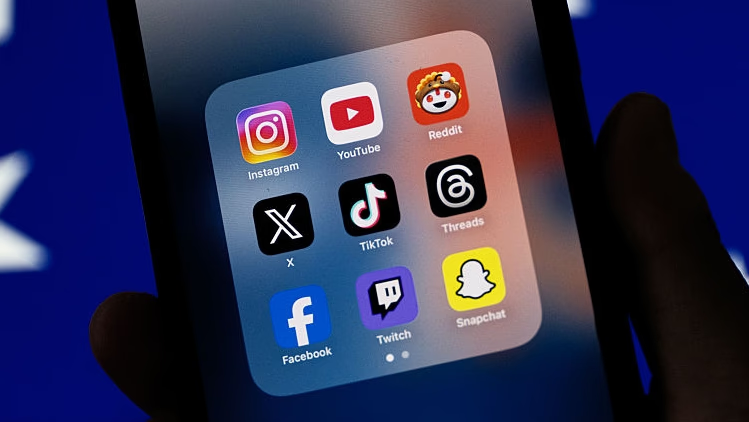
When the U.S. Surgeon General called for warning labels on social media platforms in 2024, it sounded like alarm bells for schools, health professionals, and teens themselves were already ringing: Social media saturation is exacerbating the mental health issues plaguing teens in every part of the country.
Surgeon General Vivek H. Murthy warned that the mental health crisis plaguing teenagers is an emergency, and social media is “a significant contributor.”
In response to this emergency, last year the New York legislature passed, and Governor Kathy Hochul signed into law, requiring social media platforms like TikTok and YouTube to warn teens about the dangers when they first use the platforms and then periodically during continued use. The law sought to outlaw “predatory features” such as algorithmic feeds, autoplay, and infinite scroll.
The state cites studies that show teens who spend more than three hours a day on social media suffer from anxiety and depression at twice the rate of their peers. Warning labels can help teens self-evaluate and reduce the time they spend on social media. Once the state mental health commissioner prepares the warning message, the state will set a date for the law to take effect.
A warning label alone won’t stop children from sharing personal information, having negative interactions, and accessing content that pushes them to take excessive risks. The state should fund educational campaigns to teach children digital literacy and healthy online habits. This involves teaching children about the dangers of overuse while providing models for better behavior. As long as teens continue to find emotional outlets in social media, mental health risks will remain. Such programs would need to be well funded.
Last week, a landmark case was underway in Los Angeles to convict social media giants like Google and Meta of knowingly making children addicted to their platforms. Thousands of similar cases are pending across the country. TikTok and Snap Inc. have already reached a settlement for undisclosed terms, according to the Associated Press. Also last week, a new rating system called the Safe Online Standard for social media, gaming and digital platform design products was launched, with the major platforms agreeing to the assessment.
This is progress. In a short period of time, there has been more government regulation. There are lawsuits underway seeking to hold these billion-dollar platforms accountable for the harm they cause and an independent rating system that could allow parents and advertisers to decide which platforms are safe for children. This will be a difficult challenge as warning labels on alcohol and gambling websites have not been proven to be deterrents.
The mental health of our children is deteriorating. And social media is a big reason for this. While parents play a major role in helping their families navigate the online space, they will need all the support they can get.
Editorial Board Members are experienced journalists who present reasoned opinions based on facts to encourage informed debate about issues facing our community.
