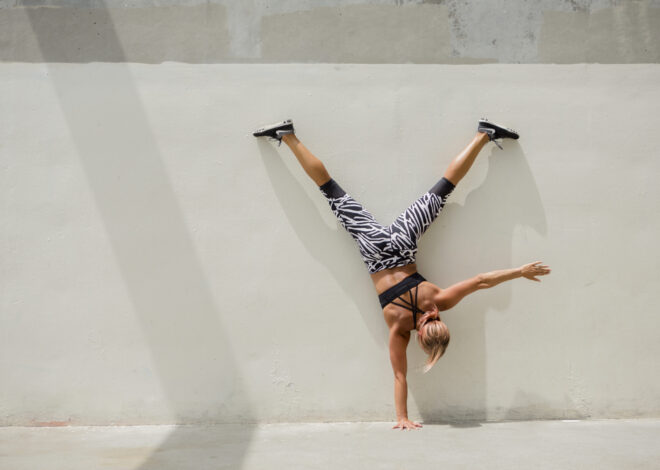
The Athlete Mindset: Skills That Transfer Beyond the Gym
[ad_1]

Athletes don’t get good by accident. They get good by training.
That same mindset—the one that takes you from wobbling through your first push-up to crushing a HIIT session or stepping confidently on the jiu-jitsu-jitsu mat—works everywhere else: writing, building a business, learning a skill, even getting your finances in shape.
If you’ve ever felt stuck because you’re “not motivated,” try this instead: act like an athlete. Create a plan, run the reps, track the work, recover, and improve a tiny bit each week. Here’s how to transfer the system.
1) Progressive Overload beats “try harder”
In the gym, progress comes from gradually increasing the demand: a few more reps, a slightly heavier kettlebell, a tougher interval. Do the same in any domain.
* Writing example: Start with 15 minutes of focused writing, 5 days a week. Next week: 18 minutes. Then 20.
* Career example: Ship one tiny deliverable daily (draft email, slide, prototype). Next week, make one of those deliverables “public” to raise the stakes.
Rule: Increase by ~5–10% per week. Not heroic. Just steady.
2) Practice days ≠ Game days
Athletes separate learning from performing. Practice is for drilling technique and making mistakes. Game day is for executing.
* Practice block: low pressure, short duration, focus on a single micro-skill (e.g., sentence flow, transitions, sales call opener).
* Game block: publish the post, send the pitch, press “record,” present the deck.
Why it works: Trying to “perform” while you’re still learning triggers perfectionism and stalls progress. Drill first. Then go live.
3) Periodize your weeks—and recover on purpose
Training cycles (base → build → peak → deload) prevent plateaus and burnout. Life needs the same rhythm.
* Four-week cycle idea:
* Week 1–2: Volume (more reps/sets or minutes)
* Week 3: Intensity (harder efforts, tighter deadlines)
* Week 4: Deload (keep the habit, reduce volume by ~30–40%)
Recovery matters: Sleep, food, and light days aren’t laziness—they’re how adaptation happens. Protect them like training.
4) Use pre-performance routines to kill friction
Athletes don’t debate whether to train—they start a routine: lace shoes, set timer, first set. Build the same ritual for your non-gym goals.
* Writing PPR (2 minutes): Open doc → title equals the question you’re answering → three bullet outline → 25-minute timer.
* Work PPR: Close tabs → phone on airplane → single to-do visible → 10 slow breaths → go.
Tiny ritual = fewer decisions = more reps.
5) Review your “film” and get coaching
Athletes watch tape. They want to see what actually happened, not what they hoped happened.
* Weekly review (15 minutes): What were my top three reps? Where did I get stuck? What’s the smallest fix?
* Find a coach: Peers, mentors, or a simple accountability partner. Ask for one concrete note per week, not a life overhaul.
No judgment—just data → tweak → another rep.
6) Five mental skills that transfer everywhere
These are staples in sport. They work because they’re trainable. I’ve used them over and over in my life—from jiu-jitsu to book writing to building a business.
1. Clear goal setting: Turn “get better” into a target you can hit this week (e.g., “write 5×20 minutes” or “send 3 pitches”).
2. Self-talk: Swap “I’m behind” for “next rep.” Keep phrases short and neutral.
3. Breathing: 1–2 minutes of slow nasal breathing to shift into focus; 1–2 “physiological sighs” after stress to reset.
4. Letting go of mistakes: Athletes often use a physical cue—shake it out, touch the mat, step back, focus on the ball—to mark the end of an error. Pick a cue; move on.
5. Mental imagery: Walk through the next rep in your head—starting, sticking point, finish. Then do it.
None of this requires talent. It requires reps.
The 7-Day Athlete-Style Plan (use it for writing, work, or any skill)
Pick your skill. Name the smallest repeatable rep. (Example: “20 minutes of focused writing” or “1 outbound pitch.”)
Set your week:
* Mon–Thu: Practice blocks (20–30 min each). One micro-skill per day.
* Fri: Game day (publish/send/present one thing).
* Sat: Active recovery (walk, stretch, long read, idea capture).
* Sun: Film review (15 min): count reps, note one improvement for next week.
Example—Writer week
* Mon: 20-min “openings” drill (write 5 first paragraphs).
* Tue: 20-min “transitions” drill.
* Wed: 20-min “fast draft” (no edits).
* Thu: 20-min “tighten” (cut 10%).
* Fri: Ship a 400–700 word post.
* Sat: Recovery walk + collect 10 ideas.
* Sun: Review: total minutes, shipped? One tweak for next week.
Example—Career/creator week
* Mon: 1 slide draft
* Tue: 1 email pitch
* Wed: 1 five-minute demo video
* Thu: Improve the roughest item by 10%
* Fri: Ship to a real human
* Sat: Recovery + capture wins
* Sun: Review + plan
Tracking: Use a simple grid: days × reps. Check the box. No vibes. Just evidence.
Bring the Athlete Mindset Into Everything You Do
Most people wait to feel different before they act. Athletes act—and that’s how they start to feel different.
Pick your “sport.” Write a two-line plan. Run today’s rep. Tomorrow, add one percent. Give it four weeks and see who you’re becoming.
Try this today: Set a 20-minute timer and do the very first rep. When it ends, put one checkmark in a box. That’s your new scoreboard.
You’ve got this.
[ad_2]
Source_link